Avatar: Fire and Ash (2025)
Directed by James Cameron
When I took my seat to watch Avatar: Fire and Ash, a sudden realization swept over me: I couldn’t remember much of anything from Avatar: The Way of Water. I remembered the shift to an aquatic setting (thanks, title), and I remembered certain scene highlights – the end fight between Sully and the Colonel, plus some epic moments involving a Pandoran whale. I wholly enjoyed that film when I saw it, but the details just didn’t stick. Concerned that this would prevent me from understanding much of the third entry in the series, I sat in the theater, reading the Wikipedia plot synopsis for the earlier film. Fifteen minutes into Fire and Ash, I realized, or remembered, that none of that really matters.
There is still a plot, of course. Picking up not long after the conclusion of The Way of Water, Jake and son Lo’ak are struggling separately over the death of the family’s firstborn son in the previous film; Lo’ak is overwhelmed by guilt while Jake can’t bring himself to entrust his son with any serious responsibility. Neytiri’s grief has morphed into a general anti-alien racism. There’s Kiri, their adopted daughter and natural clone of Sigourney Weaver’s character from Avatar, who still has some kind of unexplained natural connection to Pandora’s Mother Nature, and human teenager Spider, who is running low on his supply of batteries needed to power the mask that allows him to breathe. The bad guys are back too, with more or less the same mission as before – some are here to destroy Pandora for profit (with one conscientious scientist opposed to the idea), while the Colonel’s avatar is obsessed with bringing justice to Jake and finding Spider, his last remaining connection with his humanity. That is a lot of characters to serve, but at a length of nearly 200 minutes, there’s ample time.
And while the plot may be Cameron’s usual dollop of gobbledygook nonsense to move characters from one set piece to another, the character work is effective. Lo’ak finally proving himself to his father has some earned catharsis. Jake spends his time trying to talk some goodness into the Colonel a la Luke Skywalker in Return of the Jedi – after all, as his former superior officer, the Colonel remains the closest thing Jake Sully has in this story to a father figure of his own. Neytiri’s descent into bitter hatred of a people (in this case, humans) suggests that possibility lies in all of us. It creates a rift in her family, and it’s easy to see modern political metaphor in her hatred of the other, even referred to as aliens at one point. As Neytiri, wounded early on in an attack by a tribe of fire-loving Na’vi called the Mangkwan, rehabilitates her body, she also has to repair her soul, and she even grapples with the kneejerk defeatism I see too much in film, leaning toward the idea of sacrifice as the only solution against the relentless evil of opposing forces, which we also recently saw in Stranger Things; thankfully, Neytiri chooses to keep fighting, but it’s her journey to that decision that makes her arc worthwhile. While I wouldn’t say it’s the focus of the film, it’s still a welcome character arc in a CGI-driven action movie. That’s the case for almost all the character work, with perhaps exceptions left for Spider, waylaid by a wooden performance, and Kiri, whose only character note seems to be clearing the few hurdles on her fairly obvious path toward overpowered superhero.
That CGI is, of course, the star of the show, as it has been with Cameron since The Abyss. It’s as you’d expect – breathtaking. The variable frame rate adds a foreign exhilaration to the spectacle, at times disorienting but always for effect. There’s life in every corner of the screen. There are color palettes with scenes bathed in lavender, psychedelic visions bursting with color, and more throughout than the beautiful but overwhelming blue you expect. It’s an incredible sight to behold, not in the same category as the impressive camerawork you’d find in One Battle After Another or Weapons, where the cinematography masterfully uses perspective to evoke dread or laughter. Frankly it’s hard to know how much of this even is camerawork, but it is gorgeous, and miles ahead of the CGI I see in other contemporary films. How Cameron has managed to stay so technologically ahead of his time, I don’t know, but it’s a key part of his legacy.
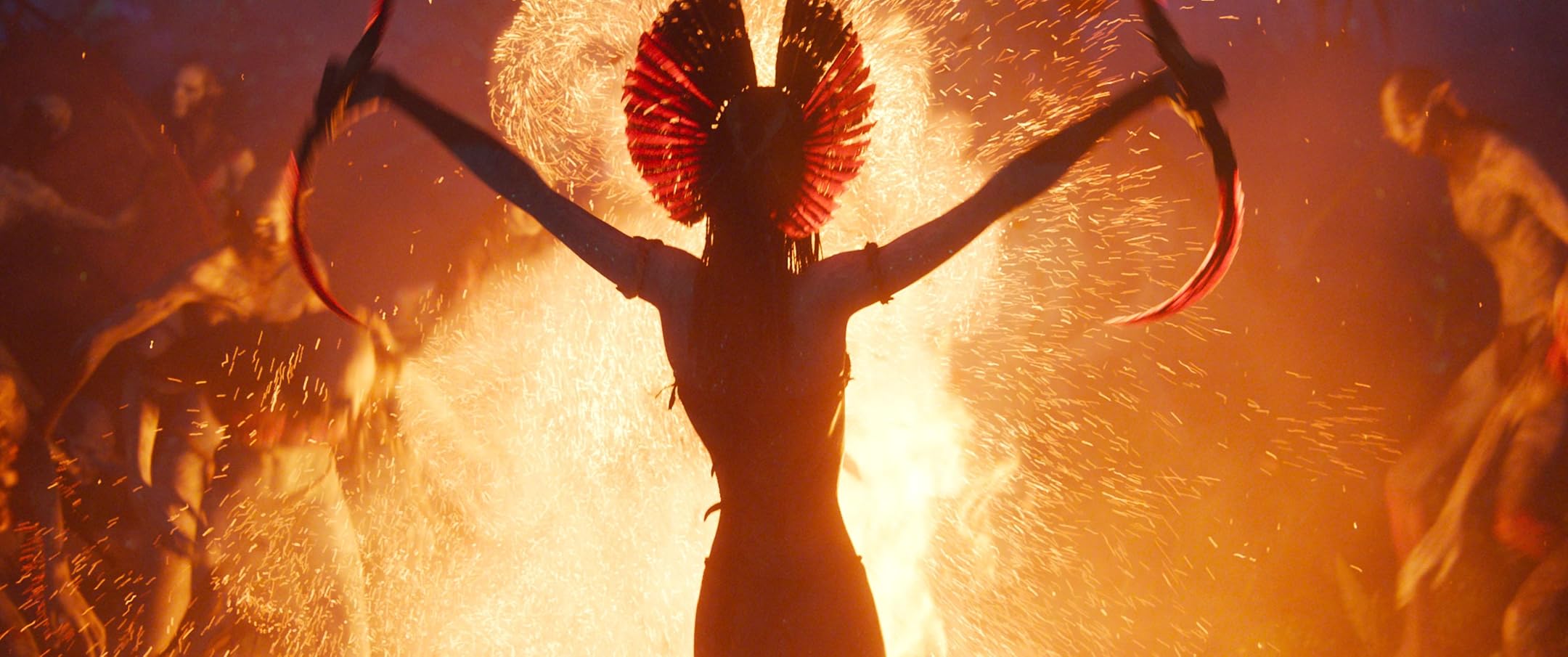
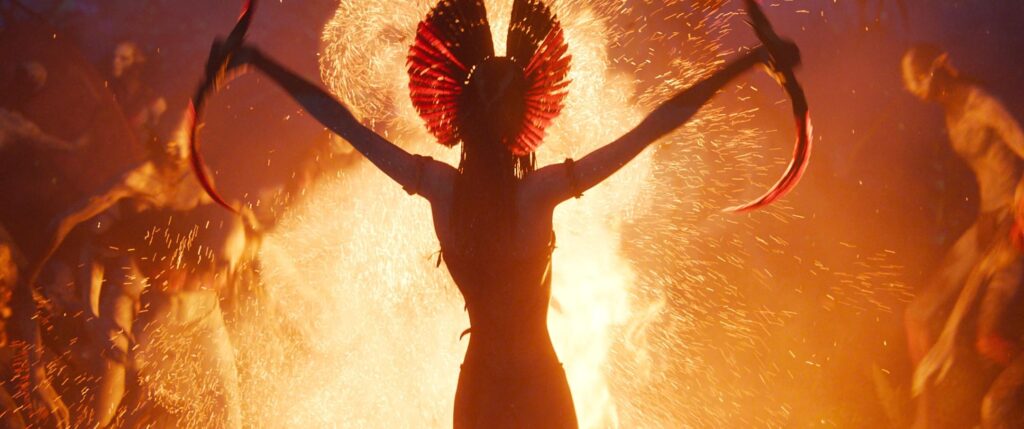
And despite all his attention to the foreign, to the new things he can create on a computer screen, the film still looks its best when Cameron’s Pandora reveals some of Cameron’s Earth. He created a fully realized foreign planet, and at the end of the day, nothing on it is more beautifully shot than those classical elements – air, water, and fire. When fights are happening in the air (a hallmark of the Avatar series), your eyes are frequently drawn past the action to the horizon or Pandora below. It lets you feel the height of the scene, which raises the visceral stakes of the moment. It should be no surprise the water stands out, given Cameron’s longtime obsession with the sea and its depths. But even in quieter moments, like characters treading near a Pandoran whale, or making a creeping escape through the trickling waters of a creek, water just looks and feels different. Then there’s the titular fire, a lurking orange beast of a character all its own thanks to the constant threat of the Mangkwan, a jarring explosion of orange and red into the consistent blue of the world.
If the film has a breakout performance, it’s that of Oona Chaplin as the Mangkwan leader, Varang. My only previous experience with Chaplin’s work, aside from a pair of guest appearances on Black Mirror and Sherlock, was in her brief and forgettable role as the hopelessly bland Queen Talisa, wife of Robb Stark on Game of Thrones. Chaplin (the granddaughter of Charlie Chaplin and great-granddaughter of Eugene O’Neill) is far from bland here. In a film that asks you to look at all corners of the screen, I couldn’t look away from Varang. The shamanistic leader has a feral intensity and a lust for fire that helps her stand out among the Na’vi. While the more staid tribesmen warn Jake early that his preference for machine guns is dishonorable (“metal infects the mind” or some folksy nonsense), after just one look at the power of firearms, Varang is instantly seduced, and she spends the film allying with anyone who can help her make bigger booms. Pandora has its own Trashcan Man, and she’s a bowling ball of momentum in a story that needed a new face (between Varang and Aunt Gladys, 2025 turned out to be a nice little resurgence of scene-stealing witches). That’s a credit to Chaplin’s performance, which gives her a pulse, elevating Varang from cartoon CGI villain to something substantial.
Despite my excitement over this filmgoing experience, it’s not without its problems. So much of the story revolves around Spider, and unfortunately the film’s worst dialogue seems to go to him. In a film that contains an F-bomb (predictably, for one character’s Big Moment), other language is bizarrely toned down, so Spider gets left calling some bad guy “butthole”, an insult I haven’t heard made earnestly since before the T-800 became a good guy. Spider may get the worst (“I gotta take a leak!”), but the bad dialogue isn’t exclusive to him. Jake calls Neytiri “baby” in enough different lines that I started to wonder if there was some sponsorship deal at work. And it’s not just the words – it’s the cadence and timing of them, sometimes sounding like actors were talking to each other on different soundstages on different shoot days. Some of the plot movement relies on character choices that aren’t quite believable. For example, an early source of tension is over Spider getting separated from the batteries for his mask – I found it a little hard to believe he wouldn’t always have the entire supply on him whatever the Pandoran equivalent of 24/7 was. These things don’t break the story or the script, but characters do occasionally get just as dumb as the plot needs them to be – like one character hanging his communication device up on a hook for no apparent reason.
Ultimately, those issues didn’t matter too much to me, because you don’t go to a James Cameron movie for plot or dialogue. You go to see the world’s best technologically-focused director knock your socks off repeatedly for three hours on the biggest screen you can find, and to that end, he nailed it again. On a smaller screen, those problems would likely be more noticeable, enough to knock this rating down to 3.5 or so, which is perhaps the reason I still haven’t revisited The Way of Water since its theatrical release ended. I think the criticisms of watching films at home is often overwrought and unrealistic. Even those who prefer going to the cinema probably can’t do so for every film they see. Theatrical runs and showtimes can be limiting, costs can be prohibitive, and other patrons can dampen the experience. But for Avatar: Fire and Ash, I’ll join the chorus. Go buy a ticket for a seat that rumbles and watch this on a giant screen while you still can.