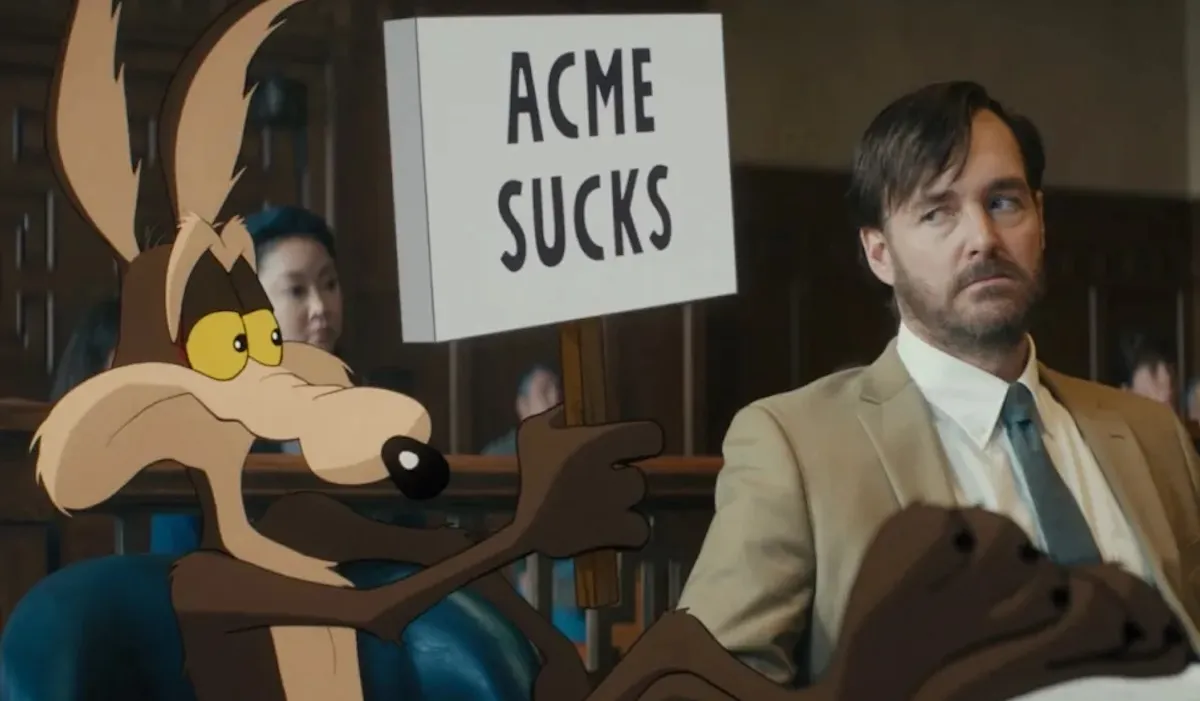
If Victor Frankenstein was the modern Prometheus, the modern Sisyphus must be that doggedly determined desert dog, Wile E. Coyote. Since his 1949 debut, he has solely focused on one goal – catching and eating the Road Runner. He is undeterred by complete and unrelenting failure and is willing to try any method – usually sold to him by the Acme Corporation – in the hopes of finally enjoying his dream meal. It’s been the same story for nearly eight decades: Wile tries to get to the mountaintop, but the boulder, without fail, pushes him back down the hill. In Dave Green’s delightful Coyote vs. Acme, Wile is trying something new. This time, Sisyphus is attacking the boulder.
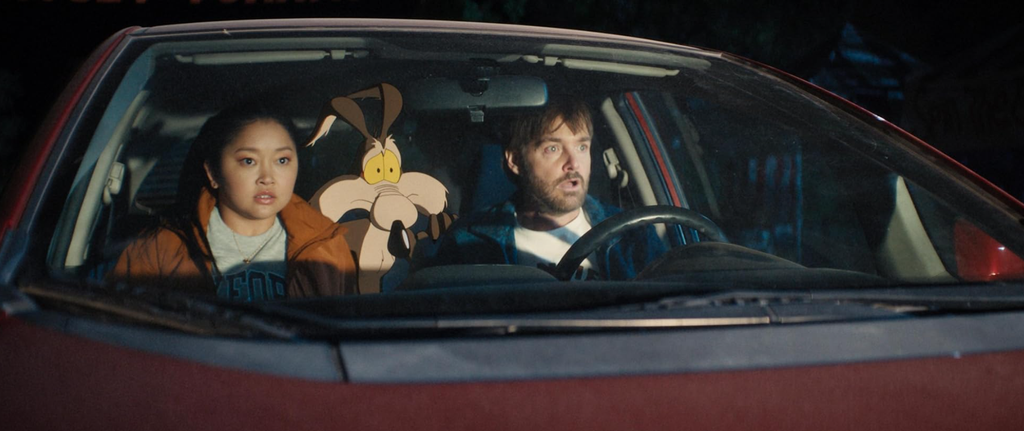
In a world where Looney Tunes characters co-exist with live-action humans, a la Who Framed Roger Rabbit?, Wile sees an ad for a local law firm specializing in Acme-related small claims litigation. The firm’s namesake, Kevin Avery (Will Forte), usually deals with single-item claims, winning his clients a few hundred bucks here or there, so he’s unprepared for the (literal) mountain of bad products Wile has wasted his money on over the years. Wile E. Coyote is Acme’s whale. He’s their most significant individual consumer, the mark they’ve scammed repeatedly for decades, and the bedrock upon which the company is built. Avery reluctantly takes on this much larger case, and faces off against his old law school rival, Buddy Crane (a perfectly cast John Cena), Acme’s in-house lawyer. Hijinks, explosions, and pratfalls ensue.
Coyote vs. Acme makes no pretense about updating itself for the modern age, which, somewhat ironically, makes it a breath of fresh air. In an era where filmmakers too often feel the need to make classic characters more accessible to the lowest common denominator, it’s nice to see one that doesn’t date itself with pop culture references or smirk at the audience, Frat Pack-style, desperate to make sure you know they also know how silly this is. This is a film comfortable in its own skin as nothing more than a Looney Tunes story told well. The last thing we need is to replace these icons with “realistic” versions of the animal who stare vapidly in climactic moments.

This “let’s not reinvent the wheel” approach is why Dave Green turned out to be the perfect director for the job. Coyote vs Acme is undoubtedly his best film, and probably his first good film, but visually, it’s very much of a piece with his prior body of work. Where Green has always excelled, even dating back to his short films, is integrating effects into live action. In his 2009 short film, Meltdown, a ham sandwich voiced by David Cross leads a group of foods trapped in an over-cooling fridge in a desperate attempt to avoid a growing block of ice. There’s nothing particularly interesting about the story, but the effects in the live action refrigerator make it memorable. Green’s 2014 feature debut, Earth to Echo, is slavishly derivative of Spielberg’s E.T.: The Extra-Terrestrial, and something of a bore as a result, but one of its few strengths is the look of the titular alien. In his Teenage Mutant Ninja Turtles: Out of the Shadows, Green is stuck with some garish character designs from the film’s predecessor, but he integrates them to their live setting more successfully than Jonathan Liebesman. It’s a sequel that’s better than its previous film, and that’s mostly due to Green’s superior visual storytelling (also thanks to Laura Linney and Krang, but sadly not Laura Linney AS Krang). These films aren’t all hallmarked by solid live action/animation integration alone; they also all keep the story simple and enjoyable. Where safe storytelling previously held Green back (and could again) this is precisely what Coyote vs Acme needs. Get out of the way and let the Looney Tunes do what they have always done best.
Speaking of the Looney Tunes roster of stars, they’re mostly all here and have their chance to shine – the film even finds a way to acknowledge its more problematic characters like Pepe Le Pew and Speedy Gonzales without giving any more mileage to what makes them unfit for 2026. While it’s nice to see Bugs, Daffy, Porky, and the gang, we never lose sight of what this movie is really about – the psychological toll taken by Wile E. Coyote at the hands of the Acme Corporation’s lust for profit.
That corporate heartlessness is where Coyote vs. Acme takes on something of a meta-textual meaning. The film, shot in 2022 for $70M, was famously shelved so Warner Bros could get a $30M tax break. Eventually, it sold to Ketchup Entertainment for $50M, and the film has since become Ketchup’s highest grossing release, now up to nearly $110M.
While Coyote vs. Acme is predominantly about one character’s fight against soulless big business, it’s also about self-discovery. When Wile embarks on this legal battle, he finds out how alone he is, and in that loneliness discovers who his real friends are. It’s a heart-warming crowd pleaser, and it’s nice to see Sisyphus finally reach the top of the mountain, if only for a moment.
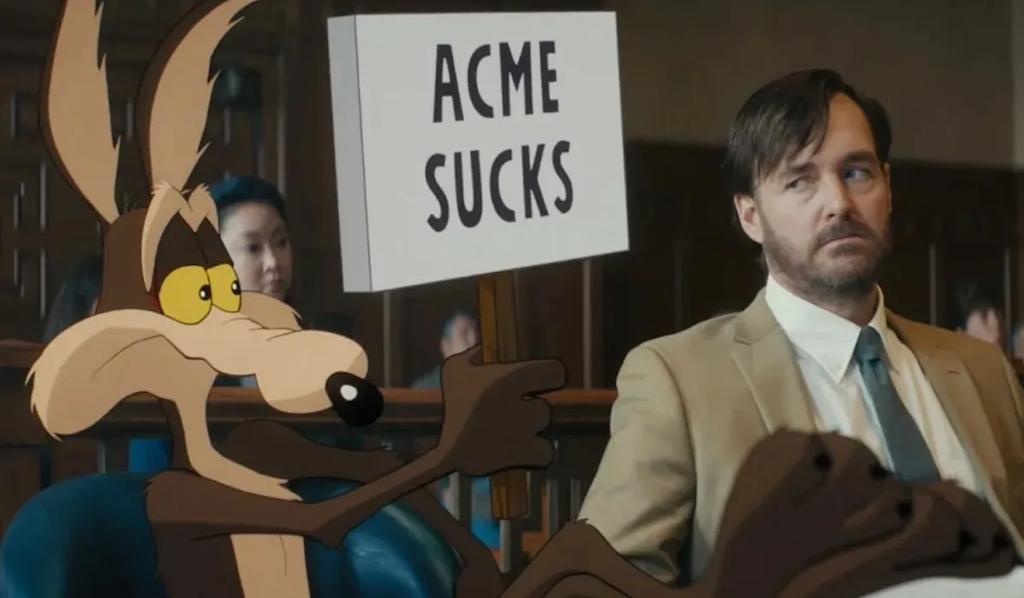
And Warner Bros nearly didn’t let anyone see so they could have a tax write-off. Indeed, Acme sucks.
Leave a Reply